
ORA KOREA DENTAL GUIDE
Veneers in Korea: 4 Materials to Compare Before Choosing Your Treatment
Composite, feldspathic porcelain, lithium disilicate, and zirconia explained for international patients
When patients compare veneers in Korea, they often focus on three things: the clinic, the dentist, and the price.
However, there is another question that is just as important: What material will actually be used for your veneers?
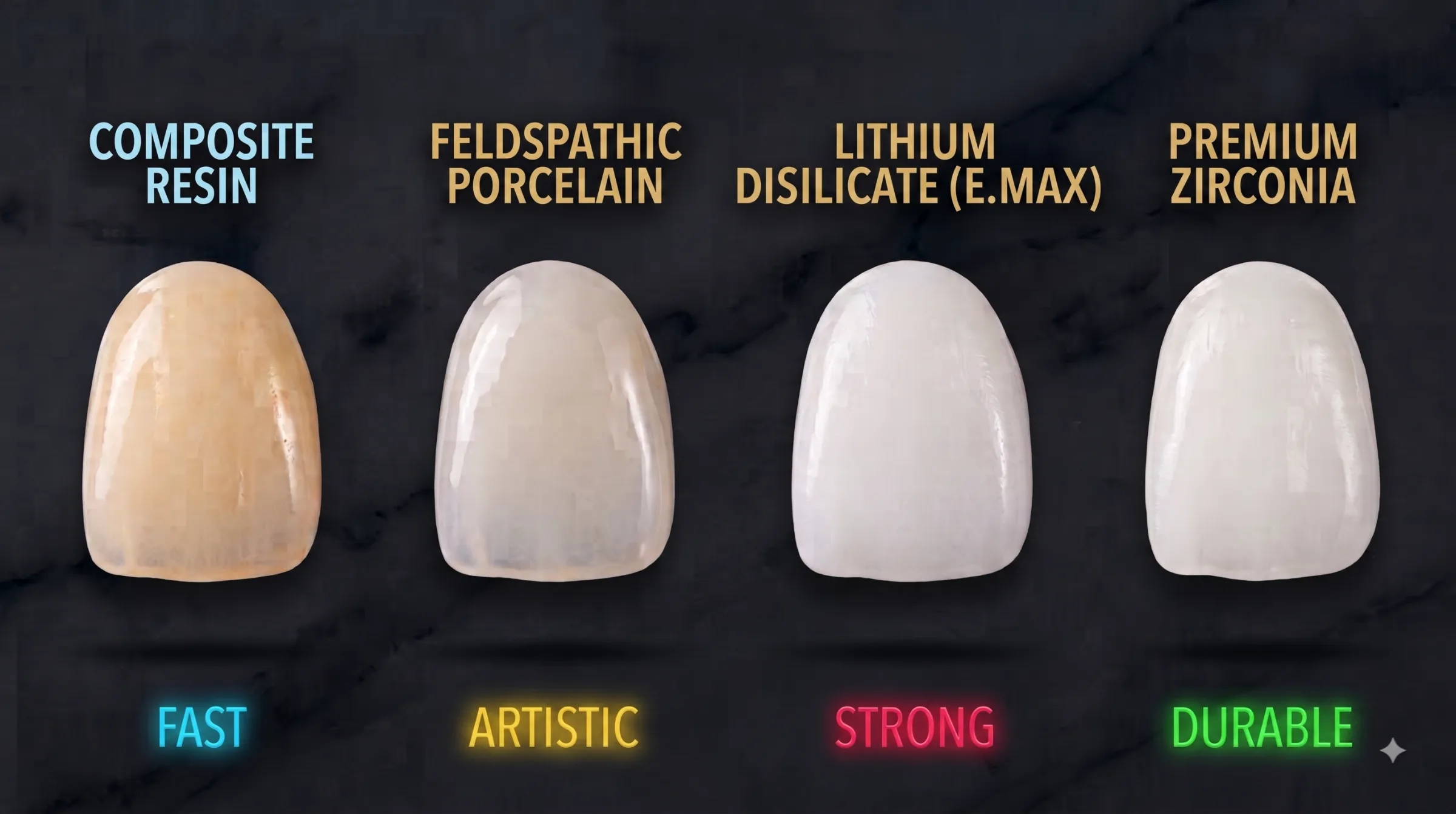
The word veneer describes the shape and purpose of the restoration, but it does not tell you what the restoration is made from. Composite resin, feldspathic porcelain, lithium disilicate, and zirconia have different optical properties, bonding requirements, strengths, limitations, and maintenance needs.
This means two clinics may both offer veneers while proposing very different treatments. Before comparing prices, international patients should understand the four main material categories and ask why a particular material is being recommended for their case.
Key takeawayThere is no universally best veneer material. The right choice depends on tooth color, remaining enamel, bite forces, desired changes, preparation design, maintenance expectations, and the dentist's clinical protocol.
A Quick Comparison of Veneer Materials
| Material | How it is made | Main advantages | Points to consider |
|---|---|---|---|
| Composite resin | Built directly on the tooth | Conservative, repairable, and often completed in one visit | More susceptible to staining, surface wear, and loss of polish |
| Feldspathic porcelain | Layered or milled glass ceramic | Highly translucent with delicate esthetic potential | Technique-sensitive and generally less fracture-resistant |
| Lithium disilicate | Pressed or CAD/CAM-milled glass ceramic | Strong balance of esthetics, durability, and reliable bonding | Requires careful preparation, laboratory work, and bonding |
| Zirconia | CAD/CAM-milled polycrystalline ceramic | High strength and useful masking ability | Different bonding protocol and less long-term veneer evidence |
1. Composite Resin Bonding / Veneers
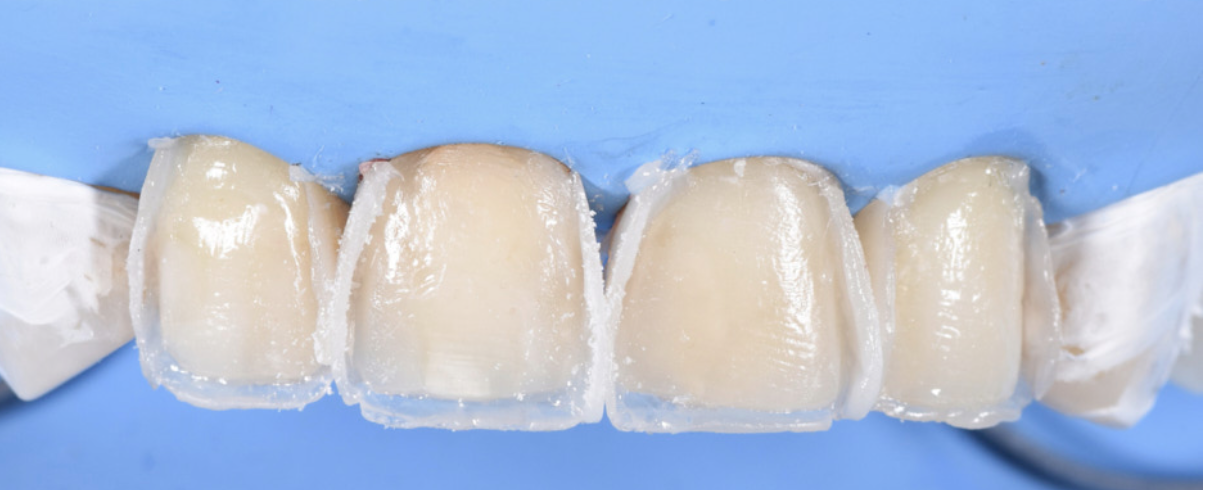
Composite veneers, often called composite bonding, are created by applying tooth-colored resin directly to the teeth.
Because the dentist builds and shapes the restoration in the mouth, treatment can often be completed in a single appointment. Composite is particularly useful for relatively small changes such as:
- Closing minor gaps between teeth
- Repairing small chips
- Improving tooth proportions
- Adjusting uneven edges
- Adding volume to undersized teeth
In suitable cases, composite can be performed with little or no removal of healthy enamel. This makes it one of the most conservative veneer options.
Advantages of composite veneers
Composite is relatively easy to adjust and repair. If a small area chips, the dentist may be able to add new resin without replacing the entire restoration.
It is also generally less expensive than laboratory-made ceramic veneers. For patients who want a reversible or minimally invasive starting point, composite can be an attractive option.
Limitations of composite veneers
Composite resin does not maintain its surface in exactly the same way as ceramic. Over time, patients may notice:
- Marginal discoloration
- Surface roughness
- Loss of gloss
- Staining from coffee, tea, wine, or smoking
- Small chips or wear
- The need for periodic polishing or repair
A clinical trial comparing direct composite and ceramic veneers found similar short-term survival, but staining and surface roughness occurred more frequently in the composite group. Composite veneers can provide excellent results, but success depends heavily on the dentist's ability to sculpt natural tooth anatomy, texture, symmetry, and color directly by hand.
Evidence: Randomized clinical trial: direct composite versus indirect ceramic veneers
2. Feldspathic Porcelain Veneers
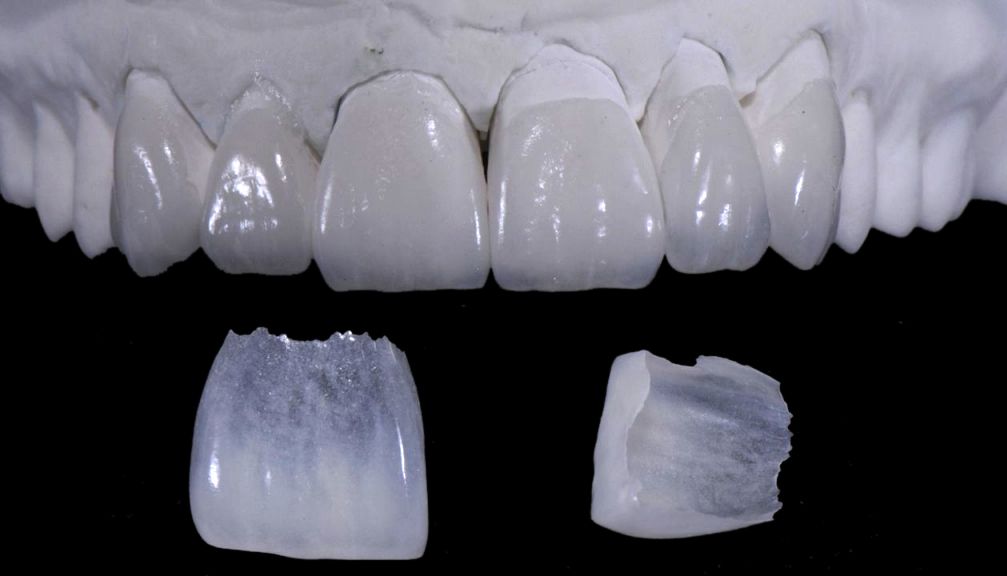
Feldspathic porcelain is a traditional veneer ceramic known for its translucency and natural optical appearance.
It can be fabricated using different laboratory techniques, including hand-layering and certain CAD/CAM systems. Because the material can be made in thin layers, a skilled dentist and dental technician can reproduce subtle characteristics such as translucency, internal color, surface texture, and light reflection.
Advantages of feldspathic porcelain
Feldspathic porcelain may be especially useful when:
- A highly translucent and delicate result is desired
- The underlying tooth color is already favorable
- Only a small amount of additional volume is required
- Enamel preservation is a major priority
- The dentist and technician are experienced in ultra-thin veneers
In carefully selected cases, it may be possible to use a minimal-preparation or no-preparation design.
Limitations of feldspathic porcelain
Feldspathic porcelain is generally less fracture-resistant than stronger ceramic materials such as lithium disilicate or zirconia. Thinness alone does not guarantee a conservative or durable result.
The risk of chipping or fracture can increase when:
- The patient has a heavy bite or grinding habit
- The veneer extends into an unfavorable contact area
- There is inadequate enamel for bonding
- The preparation and ceramic thickness are poorly controlled
- The laboratory and bonding protocols are not followed precisely
Importantly, weaker material does not automatically mean poor clinical performance. A recent systematic review reported high long-term survival for both feldspathic and lithium-disilicate veneers, although lithium disilicate showed fewer long-term complications in the pooled data.
Evidence: Systematic review and meta-analysis of ceramic laminate veneer materials
3. Lithium Disilicate Veneers
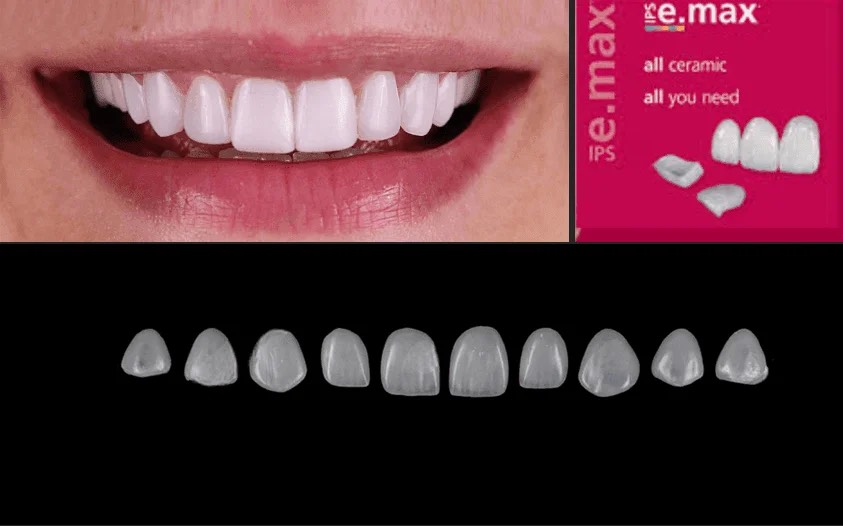
Lithium disilicate is one of the most commonly used glass ceramics in modern cosmetic dentistry. IPS e.max CAD and IPS e.max Press are widely recognized examples, although other systems are also available.
The material may be milled with CAD/CAM technology or pressed by a dental laboratory.
Why dentists frequently choose lithium disilicate
Lithium disilicate offers a practical balance between:
- Natural-looking translucency
- Fracture resistance
- Reliable adhesive bonding
- Color stability
- Laboratory flexibility
- Long-term clinical evidence
It can be used for conservative veneers, but it is also strong enough for cases requiring more substantial shape or color changes.
The material is a silica-based glass ceramic, which means its internal surface can be conditioned and bonded using an established ceramic bonding protocol. The tooth surface must also be prepared and isolated correctly.
For this reason, the final outcome depends on much more than the ceramic brand. Moisture control, enamel preservation, surface treatment, resin cement selection, and light curing can all affect the result.
Long-term evidence for ceramic veneers is generally favorable. A recent meta-analysis reported a pooled survival rate of approximately 97% for lithium-disilicate veneers at an average observation period of about 10 years. These numbers describe study populations, not a guarantee for an individual patient.
Evidence: Long-term survival and complication data for laminate veneers
Points to discuss with your dentist
Ask whether the clinic plans to use a pressed or milled restoration, how much tooth reduction is expected, and whether the veneers will be bonded primarily to enamel or dentin.
These details may be more important than simply asking whether the clinic uses e.max.
4. Zirconia Veneers
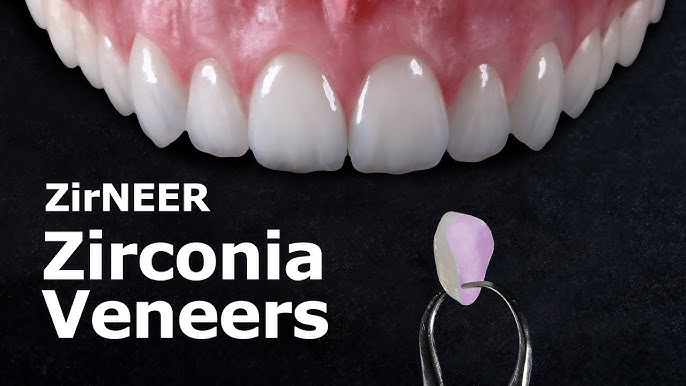
Zirconia has traditionally been used for crowns, implant restorations, and bridges because of its high strength.
Older zirconia materials were relatively opaque, which limited their use for highly esthetic veneers. Newer, more translucent zirconia formulations have improved their optical appearance and created new possibilities for anterior restorations.
However, zirconia should not be considered one single material. Different zirconia formulations offer different balances of translucency and strength. In general, increasing translucency can also reduce some of the mechanical advantage associated with traditional zirconia.
Potential advantages of zirconia veneers
Zirconia may be considered when:
- Additional fracture resistance is desirable
- The underlying tooth color needs to be masked
- The patient has limited restorative space
- The dentist wants a material with a low risk of ceramic chipping
- Other clinical factors make a glass ceramic less suitable
If a zirconia veneer becomes detached but remains intact, rebonding may sometimes be possible. However, this is not automatically a simple procedure. The dentist must evaluate the veneer's fit, surface condition, contamination, and the remaining tooth structure.
Zirconia requires a different bonding protocol
Unlike feldspathic porcelain and lithium disilicate, zirconia is not a conventional silica-based glass ceramic. It therefore cannot be treated with exactly the same bonding protocol.
Zirconia bonding commonly involves carefully controlled surface conditioning and an adhesive system containing an MDP functional monomer. The details vary depending on the zirconia formulation and manufacturer.
Research supports combining appropriate mechanical surface treatment with compatible chemical primers, while also showing that bonding remains highly technique-sensitive. Long-term clinical data for zirconia veneers are still more limited than the evidence available for feldspathic porcelain and lithium disilicate. Zirconia can be promising, but patients should ask why it is being recommended and how much experience the provider has with zirconia veneers specifically.
Evidence: Systematic review of zirconia surface pretreatments and resin cements
Why the Dentist's Protocol Matters as Much as the Material
A premium ceramic does not guarantee a premium result.
Veneer treatment involves several stages, and a problem at any stage can affect the final outcome:
- Diagnosis and bite evaluation
- Smile design and tooth proportion planning
- Enamel preservation and preparation design
- Impression or digital scanning
- Laboratory communication
- Veneer try-in and color approval
- Surface treatment of the restoration
- Tooth isolation and bonding
- Bite adjustment
- Maintenance and follow-up
Each material requires its own surface-treatment and bonding protocol. A technique used for lithium disilicate should not automatically be applied to zirconia, and a direct composite veneer requires a different skill set from a laboratory-made ceramic veneer.
The material and the dentist's protocol must work together.
Questions to Ask Before Booking Veneers in Korea
- What exact veneer material are you recommending? Ask for the material category, not only the phrase porcelain veneer.
- Why is this material appropriate for my case? The answer should relate to your tooth color, enamel, bite, desired shape, and treatment goals.
- Will my teeth require preparation? No-prep should be based on your anatomy, not used as a universal marketing promise.
- How much enamel is expected to remain? Bonding primarily to enamel is generally more predictable than relying heavily on dentin.
- How will I approve the smile design? Ask about photographs, digital simulations, diagnostic wax-ups, mock-ups, and provisional restorations.
- What bonding protocol will be used for this material? This is particularly important when comparing glass ceramics with zirconia.
- What happens if a veneer chips, stains, or debonds? Ask whether it can be polished, repaired, rebonded, or must be replaced.
- What maintenance is included after treatment? International patients should clarify follow-up visits, night guards, polishing, repairs, and warranty conditions.
- Is the quote complete? Confirm whether the price includes scans, temporary restorations, laboratory fees, mock-ups, bite guards, adjustments, and follow-up care.
The Bottom Line
Not all veneers are the same.
Composite resin, feldspathic porcelain, lithium disilicate, and zirconia can all be appropriate materials, but for different reasons. The best option is not necessarily the strongest, thinnest, most expensive, or most heavily advertised material.
The right choice should balance:
- Esthetics
- Tooth preservation
- Bite forces
- Bonding predictability
- Repairability
- Long-term maintenance
- The dentist's experience
- Your individual treatment goals
When consulting a cosmetic dentist in Korea, do not ask only, How much are the veneers?
The better questionWhich material would you use for my teeth, and why?
A good dentist should be able to explain the recommendation clearly, including both its advantages and limitations.
Medical disclaimer: This article is intended for general educational purposes and does not replace an examination, diagnosis, or individualized treatment plan from a licensed dentist.
About ORA Korea
ORA Korea helps international patients understand and compare dental treatment options in Korea. Our goal is to make treatment plans, materials, timelines, and clinic information easier to evaluate before patients book their care.
Sources and Further Reading
- Klein et al. Survival and complication rates of ceramic laminate veneers (systematic review and meta-analysis).
- Randomized clinical trial comparing direct composite and indirect ceramic veneers in diastema closure cases.
- Systematic review of zirconia surface pretreatments and resin cements.
- Ivoclar IPS e.max CAD instructions for use and material information.