Do these actually need to come out?
Wisdom teeth pick their moment badly. A dull ache at the back of the jaw that shows up mid-trip, a gum that swells and settles and swells again, or a dentist at home who mentioned an impaction two years ago and has been politely ignored ever since.
The question people actually ask us is not a clinical one. It is whether they can still fly home on Sunday. We take that seriously, because recovery, not the surgery, is what decides whether this fits your trip at all. Send an X-ray and a description of what it feels like, and a Seoul clinic will tell you whether these need to come out at all, since often they do not, and how many quiet days to leave before your flight. This page is the unhurried version of that answer.
The basics
What this actually is
Wisdom teeth are the third molars at the very back of the mouth, usually the last teeth to appear, often in the late teens or twenties. Sometimes they come in cleanly and cause no trouble at all. Just as often there is not enough room for them, and they emerge at an angle, only partway, or stay trapped beneath the gum, a situation known as impaction, which can lead to pain, swelling, infection, or crowding of the neighboring teeth.
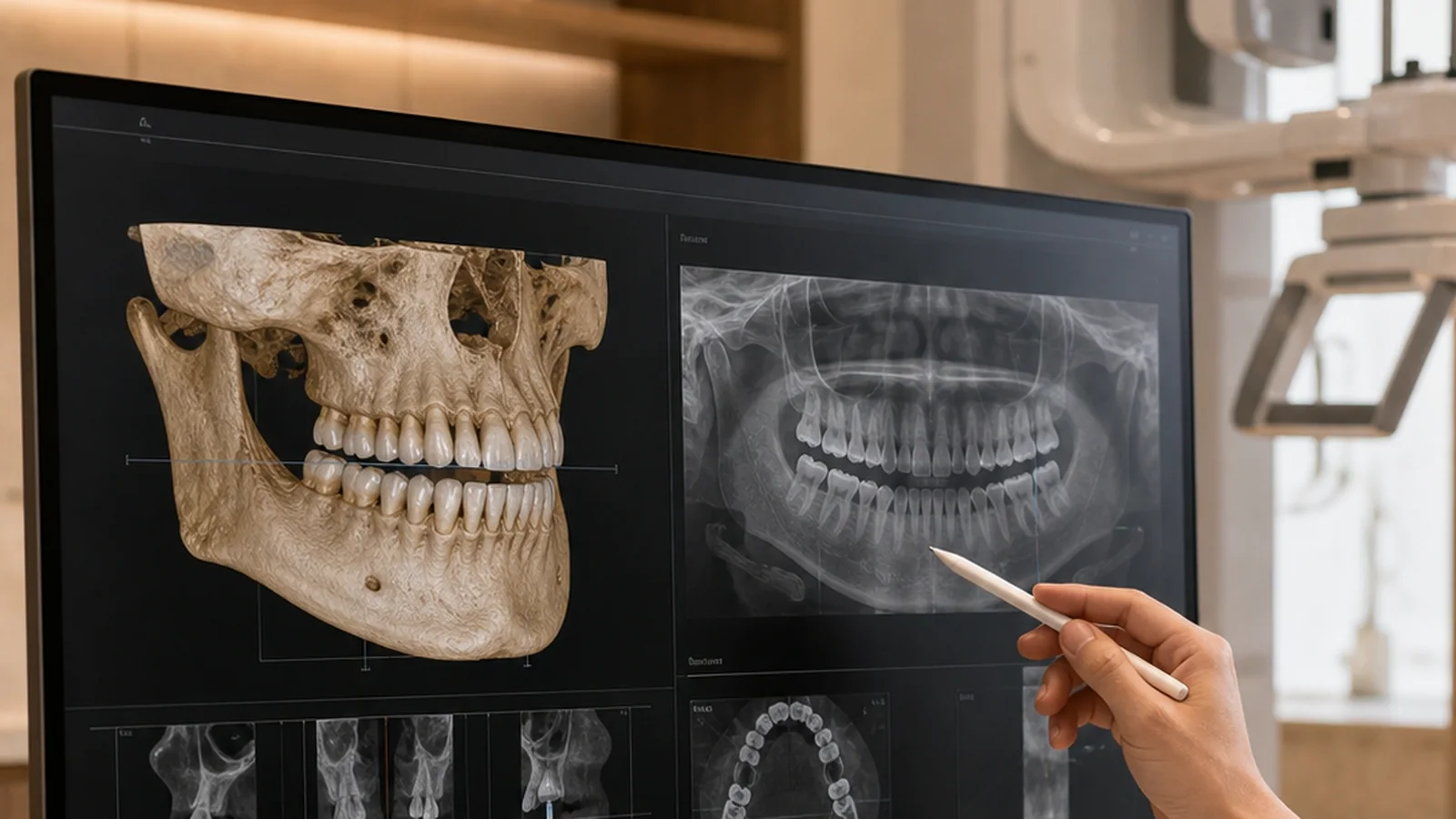
Not every wisdom tooth needs to be removed. The decision rests on assessment: an examination together with X-rays, and sometimes a 3D CT scan, to see how the tooth is positioned and how close it lies to nerves and the sinus. A straightforward, fully erupted tooth may simply be watched, while an impacted or infected one is more likely to be recommended for removal. A candid clinic explains why a particular tooth should come out, or why it can safely be left alone.
Ora does not perform surgery and does not arrange treatment. This page covers when removal is genuinely indicated, what it costs in Seoul, and what to ask an oral surgeon before you commit. A clinic's preliminary read on your X-ray helps you plan the trip, but it is not a diagnosis. Its own in-person exam and imaging are what determine the actual approach.
Candidacy
Is this right for you?

Wisdom tooth care is often considered when a third molar is causing pain, recurrent gum infection around a partly erupted tooth, decay that is hard to clean, or pressure on the teeth in front of it. It is also relevant when a dentist has flagged an impacted tooth on an X-ray, even before symptoms appear, because some impactions are better addressed before they cause problems. If you have discomfort at the back of your jaw or have been told your wisdom teeth are coming in poorly, an assessment is a sensible step.
Removal is not automatic. A wisdom tooth that has come in fully, sits in a healthy position, and can be kept clean may not need to be touched at all, and a responsible clinic will say so rather than recommend surgery you do not need. On the other hand, deeply impacted teeth near a nerve call for careful surgical planning and sometimes a specialist. Putting your situation to a clinic before you travel helps clarify whether this is likely to be a simple extraction, a surgical one, or a case for watchful monitoring.
Why Korea
Why wisdom teeth are a good fit for a Korea trip

Extractions are one of the few treatments that genuinely finish in a single visit, which makes them unusually suited to travel. Seoul clinics generally take a CBCT rather than relying on a panoramic X-ray alone, and for wisdom teeth that matters more than for almost anything else: the lower ones often sit close to the nerve that supplies the lip and chin, and 3D imaging is what turns that from a risk into a planned approach. Oral surgery volume here is high, and the cost is a fraction of US pricing.
The constraint is recovery, not surgery. Swelling peaks around the second day, and a cabin at altitude is an unpleasant place to spend it. This is the treatment where the clinic's advice about how many quiet days to leave should shape your flights, rather than your flights shaping the plan.
What to look for when you compare clinics
Ask whether they take a CBCT, not just a panoramic
For a lower wisdom tooth near the nerve, 3D imaging is what makes the approach deliberate. It is a reasonable thing to insist on.
Ask how many they would remove in one sitting
All four at once is common and often sensible, but it makes recovery harder. The right number depends on your teeth and your schedule, and should be discussed rather than assumed.
Ask how many recovery days before flying
Get a number, and then book your flight around it. This is the single most useful question on this page.
Ask how to reach them at night
Most recoveries are uneventful. For the ones that are not, knowing who to message at 2am from a hotel room is worth a great deal.
Before you go
Getting ready for the trip

Since you will be travelling, collect your records first. Recent X-rays, a panoramic image if you have one, and notes on your symptoms let the reviewing clinician gauge the likely difficulty ahead of time. If imaging is older or unavailable, the clinic will take fresh pictures on arrival, but even partial records help shape a realistic plan and reduce unknowns before you fly.
Recovery is the part of wisdom tooth care that most affects trip planning, so build your schedule around it. Surgical removals in particular are followed by swelling and soreness that peak over the first couple of days, and flying too soon can be uncomfortable. Ask the clinic how many teeth they would remove at once, whether the case is simple or surgical, and how many recovery days to allow before your return flight, so you leave enough buffer rather than boarding a plane still swollen.
During
What actually happens
- 1
Choose a clinic and send your X-rays
Shortlist clinics with oral surgery experience, then send your symptoms and any X-rays. Ask each for an honest read on whether removal is likely or whether monitoring may be enough — a clinic willing to say 'wait and watch' is telling you something useful. This is a planning step, not a diagnosis.
- 2
In-person assessment and imaging
At the clinic, the dentist or oral surgeon examines the area and takes fresh X-rays, and often a 3D CT scan, to see exactly how each wisdom tooth sits and how close it lies to nerves and the sinus. This imaging is what determines whether an extraction is simple or surgical, and it can change the plan from the remote picture.
- 3
Planning the extraction
Based on the imaging, the clinician explains what your case involves, whether one or several teeth will be removed, and whether the approach is a simple extraction or a surgical one for an impacted tooth. Anesthesia options are discussed, along with the expected recovery. You should leave this conversation clear on what will happen and why.
- 4
The procedure
The area is numbed with local anesthetic, and sedation may be offered for more complex or anxious cases. A simple extraction lifts the tooth out directly, while a surgical one may involve a small incision in the gum and removing the tooth in sections. Most extractions are completed in a single appointment.
- 5
Immediate recovery
Afterward the clinic places gauze, gives you clear aftercare instructions, and explains how to manage bleeding, swelling, and discomfort. You will typically rest before leaving and be told what to expect over the coming days. This is when following instructions closely matters most for smooth healing.
- 6
Healing and follow-up
Over the following days the swelling subsides and the socket begins to heal. Some cases involve dissolvable stitches or a follow-up check, which the clinic will arrange around your travel dates. Ask how they handle questions once you are home, since much follow-up can be managed remotely.
How do you know a clinic is any good?
Licence, sterilization, the lab, the follow-up plan. How to check each one from the other side of the world.
After
Afterwards, and how you'll feel

The first few days after a wisdom tooth removal are the most important for healing. Expect some swelling and soreness, which usually peak around the second day and then ease; cold compresses, prescribed or recommended pain relief, soft foods, and rest all help. Avoid vigorous rinsing, smoking, and drinking through a straw in the early days, since these can disturb the healing socket and lead to a painful complication known as dry socket. Follow the clinic's specific instructions closely rather than general advice.
Because you may be flying home while still healing, plan your recovery days deliberately and ask the clinic what is safe and when. A clinic experienced with international patients will explain what normal healing looks like, what warning signs to watch for, such as increasing pain after a few days, fever, or ongoing bleeding, and how to reach them. Ora can help keep that communication clear in English, so you are supported even after you leave Korea.
The outcome
What to expect, and how long it lasts

Once healing is complete, a wisdom tooth that was causing pain, infection, or crowding is simply gone, and the discomfort it caused usually goes with it. For most people recovery is a matter of days to a couple of weeks, with the worst behind them early and normal eating returning gradually. Removing a problematic wisdom tooth can also protect the neighboring molar and make the back of the mouth easier to keep clean over the long term.
As with any surgery, outcomes vary and honesty matters more than reassurance. Simple extractions tend to heal quickly and uneventfully, while deeper impactions near a nerve carry a small risk of temporary or, rarely, lasting altered sensation, which a good clinic will discuss with you beforehand. Not every wisdom tooth needs removing, and where a tooth is healthy and stable, leaving it alone is a legitimate result too. The right outcome is the one that fits your specific mouth, decided with a clinician who has examined you in person.
Questions
Questions people actually ask

Do all wisdom teeth need to be removed?
No. A wisdom tooth that has come in fully, sits in a healthy position, and can be kept clean may not need removal at all. Extraction is more often recommended for impacted, infected, or crowding teeth. A responsible clinic will tell you when a tooth can safely be left alone.
What is the difference between a simple and a surgical extraction?
A simple extraction removes a tooth that has erupted normally and can be lifted out directly. A surgical extraction, used for impacted teeth, may involve a small gum incision and removing the tooth in sections. The imaging taken at the clinic determines which applies to your case.
How long is the recovery?
For most people the worst is over within a few days, with swelling peaking around the second day and normal eating returning over one to two weeks. Surgical extractions of impacted teeth can take a little longer. Because of this, it is wise to build recovery days into your trip before flying home.
How soon can I fly after having them out?
It depends on how complex the extraction was, and this is a question to put to the clinic directly. Flying too soon after a surgical removal can be uncomfortable while swelling is at its peak. Leaving a buffer of a few recovery days is far easier than travelling still sore.
Is the procedure painful?
The extraction itself is done under local anesthetic, and sedation may be offered for complex cases, so it is typically comfortable at the time. Soreness comes afterward as you heal and is usually manageable with rest and recommended pain relief. Following the aftercare instructions closely keeps most recoveries smooth.
Can Ora tell me whether I need surgery before I travel?
A clinic can review your records and give you an informed sense of whether removal is likely, which helps you plan. But a preliminary opinion is not a diagnosis. Only an in-person exam with fresh imaging can confirm the approach your wisdom teeth actually need.